
14th International Conference on Multidisciplinary Research in Education
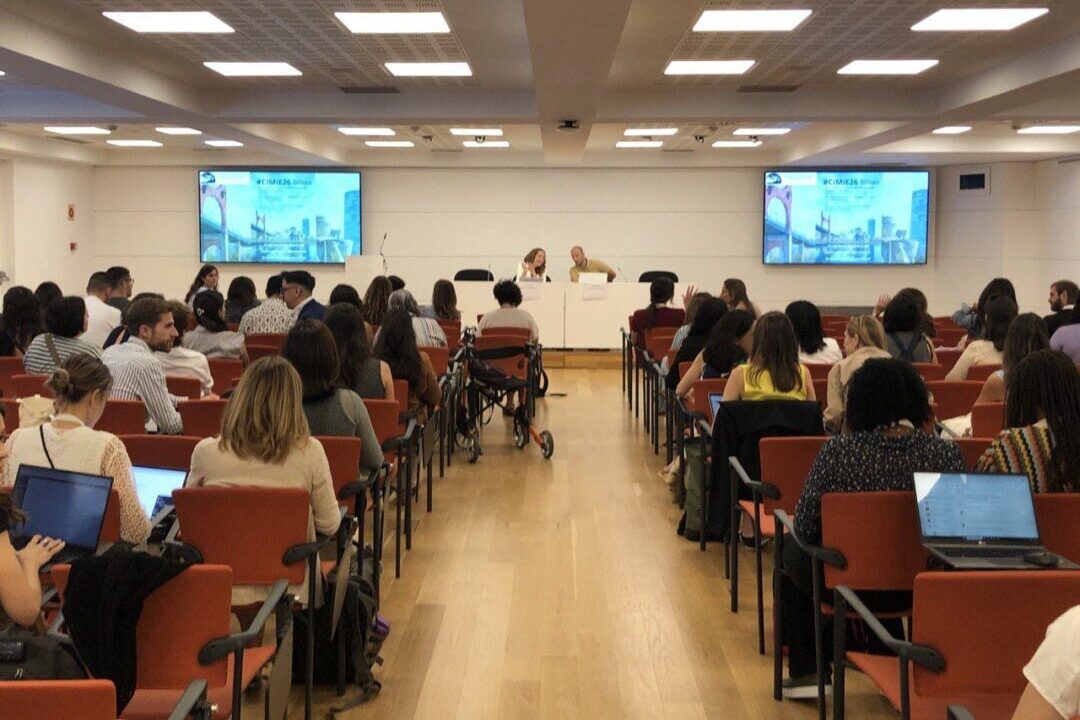
Today, July 2nd, marks the opening of the 14th International Conference on Multidisciplinary Research in Education.
In the words of Esther Roca and Mikel Pérez, president and board member of AMIE:
«Txoria txori is a true anthem of popular freedom. A song deeply tied to this land, one that reminds us that if we had clipped its wings, it would no longer be a bird. Perhaps that image can help us grasp the deeper meaning of education, and of educational research too. In what way does what we discuss, research and share here help give people, and our societies, wings? How do we manage to ensure that the knowledge we generate expands freedoms, opens up opportunities and lets each person develop their capacities fully?»
The motto of this edition, «The dream was possible, now it is real,» invites us to look back on how far educational research has come. For years we dreamed of an education that was more inclusive, more democratic, capable of responding to the great social challenges of our time. We dreamed that scientific evidence could guide educational policy, improve teaching practice and help build fairer societies. Today, many of the studies presented at this conference show us that this dream was not a utopia. Wherever scientific knowledge has gone hand in hand with the dedication of teachers, students, families, communities and institutions, real, measurable change has followed.
Educational research reaches its fullest value when it improves people’s lives. And that is precisely why CIMIE holds such a distinct place within the international research community. Since it was founded in 2011, this conference has helped make that dream possible, establishing itself as a leading international forum for those who understand that scientific excellence and social impact are not competing goals but inseparable ones. Year after year, some five hundred researchers from more than a hundred universities gather here to share evidence, debate results and work together toward knowledge that drives social change. People everywhere deserve better educational outcomes; this annual conference stands out for delivering scientific evidence that achieves exactly that, challenging the belief that such results cannot be achieved. The many disciplines involved in educational research, in order to earn the recognition and resources they deserve, need to show that they contribute to those improvements, and this annual conference is proving it. To achieve the advancement of our field, we have to produce research that gets published in indexed journals, and this annual conference is doing so at an increasing rate, well above other conferences.
CIMIE has also been a pioneer in Europe in placing the social impact of educational research at the center of scientific debate. Long before this topic gained the prominence it now holds on research agendas, this conference was already pushing forward the study of how scientific knowledge can be generated in collaboration with citizens, particularly by including the voices of those who have traditionally been historically marginalized in research. Looking back at previous conference programs makes it clear how this commitment has grown into one of its defining traits.
CIMIE was also a forerunner in setting up a Zero Violence Committee and in defending academic spaces free of violence, promoting the rejection of both direct violence and isolating violence, and helping to create scientific environments that are safe, ethical, democratic and courageous in how they examine and study these issues.
This edition’s program also reflects the remarkable vitality of educational research today. We are joined by international figures who will help us reflect on some of the great challenges of our time. Today we will have the privilege of hearing from Dragana Avramov, a leading voice in educational policy. The panels invite us to reflect on questions as relevant as the role of music education in social transformation, the opportunities and challenges posed by artificial intelligence, social media and the collaborative production of knowledge, and the impact these phenomena have on new generations.
Tomorrow, the closing keynote by Sari Hanafi will take us into the importance of dialogue as a tool for overcoming polarization and building more democratic societies. And it will come after a day of dialogue on issues as urgent as preventing child sexual abuse, multilingualism and overcoming racism, and the introduction of a new thematic area that captures particularly well education’s capacity to respond to contemporary social challenges: Health Education.
That is why, in opening this new edition here in Bilbao, a city that has managed to reinvent itself without giving up its identity, we can say that the dream behind our motto does not belong only to the past. All these contributions, coming from very different angles, share one shared aspiration: to understand our world better in order to expand opportunities for people and communities. In short, to help education keep giving wings wherever barriers still remain to be overcome.
And with this dream, we declare open the fourteenth edition of the CIMIE conference. It is an honor to share this space with all of you.